
Factors and Effects of Wavy Cutting with a Hub Blade
What is Wavy Cutting?
Wavy cutting is a phenomenon in which the kerf deviates from side to side relative to the direction of blade travel. Figures 1 and 2 show top views of the kerfs produced when a wafer was processed using a hub blade. As shown in Figure 2, when wavy cutting occurs, the kerf curves in a wavy pattern.
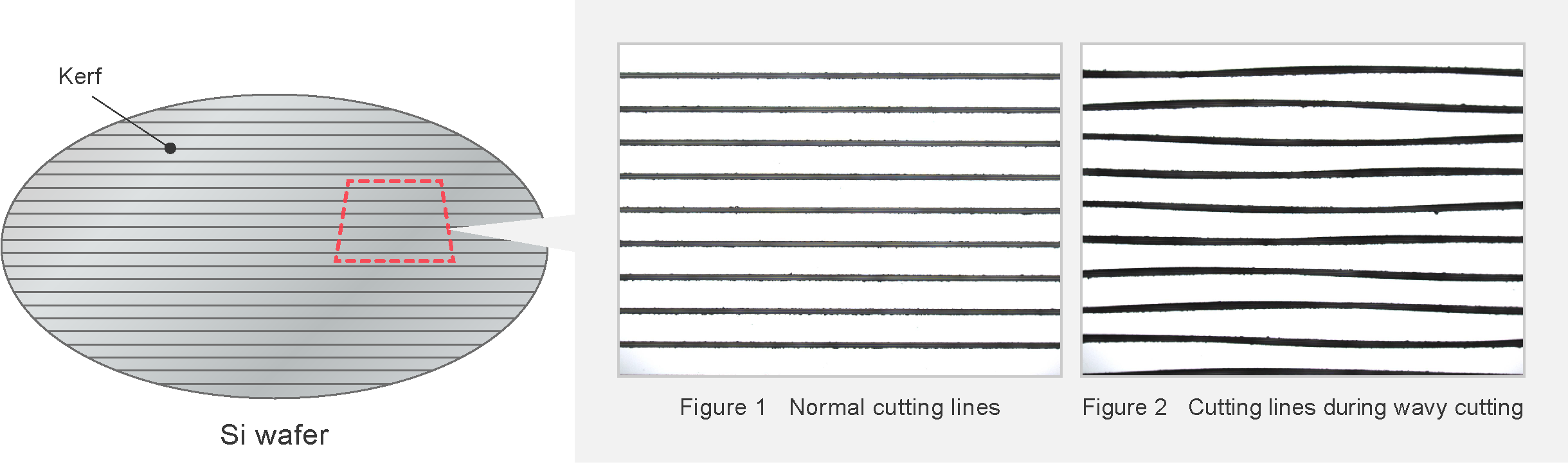
Factors and Effects of Wavy Cutting
Wavy cutting can be caused by various factors and can have a wide range of effects. In addition, wavy cutting may cause other defects

Factor 1: Spindle Rotation Speed
Generally, the higher the spindle rotation speed, the more likely wavy cutting is to occur. Although increasing the spindle rotation speed can improve processing quality, such as by reducing chipping, it also increases the risk of wavy cutting.
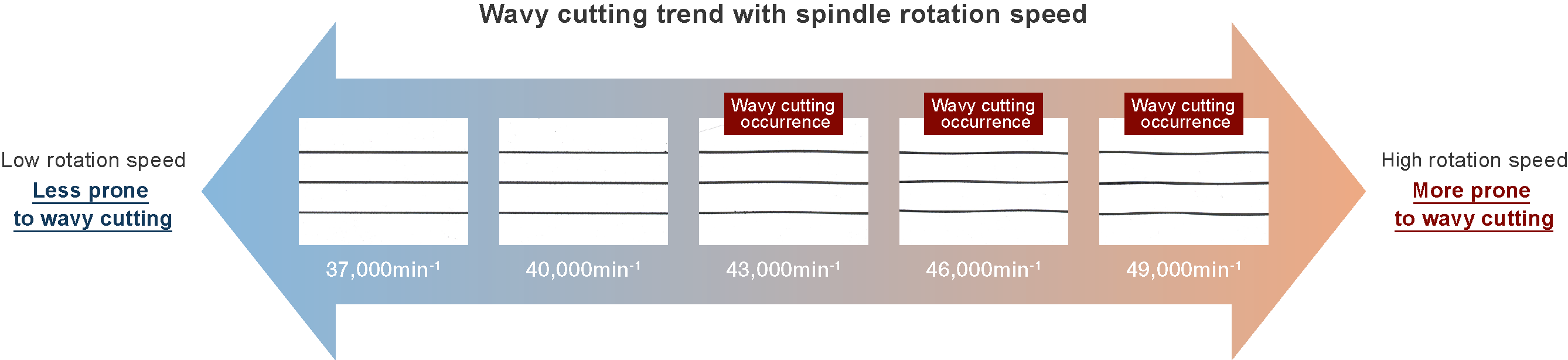
Note: This processing example shows the results of processing using a hub blade under conditions where wavy cutting is likely to occur.
Factor 2: Kerf Width and Blade Exposure (Aspect Ratio)
Generally, the narrower the kerf width and the longer the blade exposure, the lower the blade strength and the greater the likelihood of wavy cutting. A narrower kerf width has the advantage of increasing the number of die obtained per wafer, and longer blade exposure improves blade life. However, both increase the risk of wavy cutting.
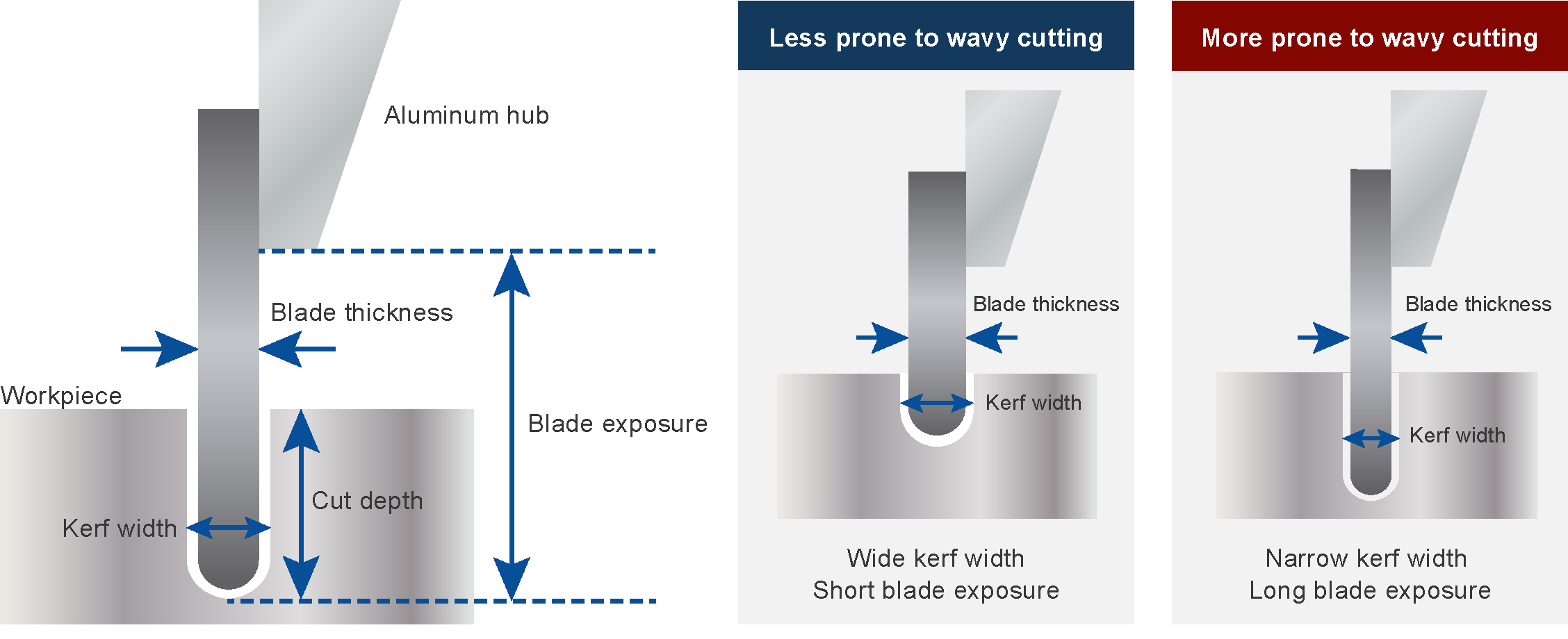
Wavy Cutting and Blade Aspect Ratio
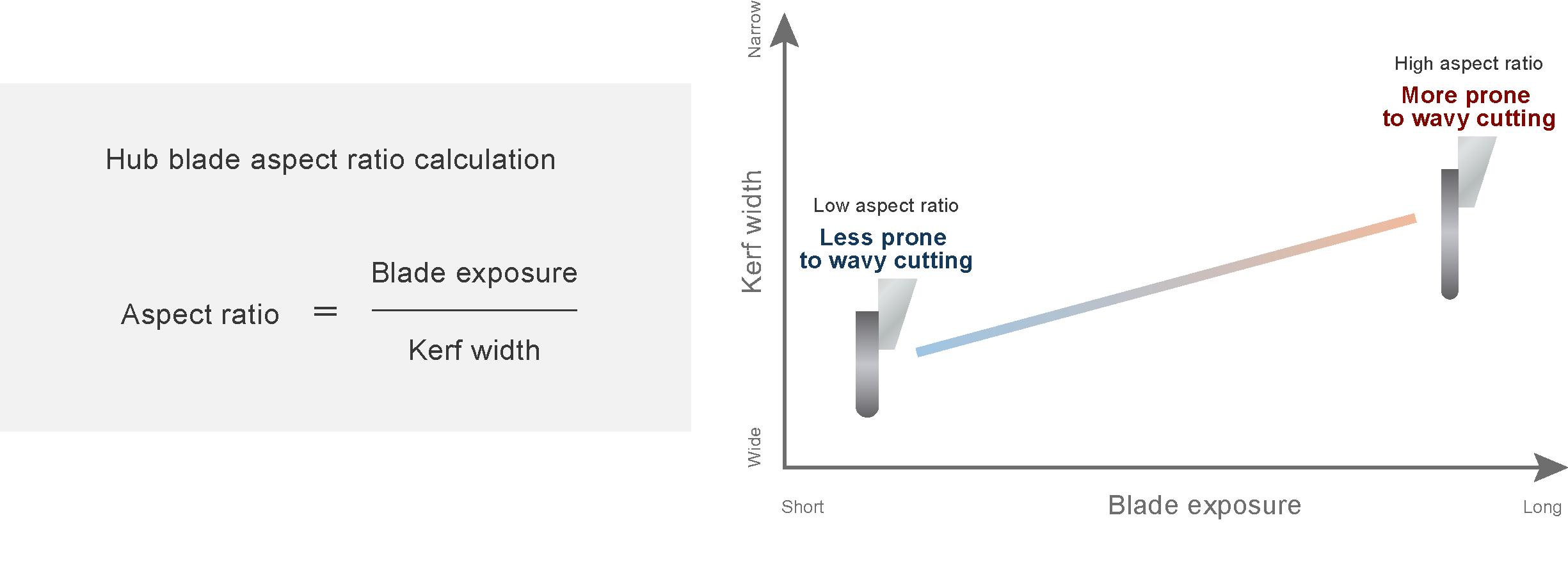
Aspect ratio is an indicator of the relationship between the kerf width and blade exposure of a hub blade. The higher the aspect ratio, the more likely wavy cutting is to occur, and the lower the aspect ratio, the less likely it is to occur.
Factor 3: Combined Factors of Spindle Rotation Speed and Aspect Ratio
In actual processing, spindle rotation speed and blade aspect ratio need to be considered together. For example, even at a low spindle rotation speed where wavy cutting is less likely to occur, an extremely high blade aspect ratio may result in wavy cutting. Conversely, even at a high spindle rotation speed where wavy cutting is more likely to occur, a low aspect ratio may prevent wavy cutting. The figure below provides a guideline for the occurrence of wavy cutting based on spindle rotation speed and aspect ratio, using verification test results and empirical data. For example, when using a blade with an aspect ratio of 30, 45,000 min‐1or less is a guideline for the region where wavy cutting is less likely to occur.
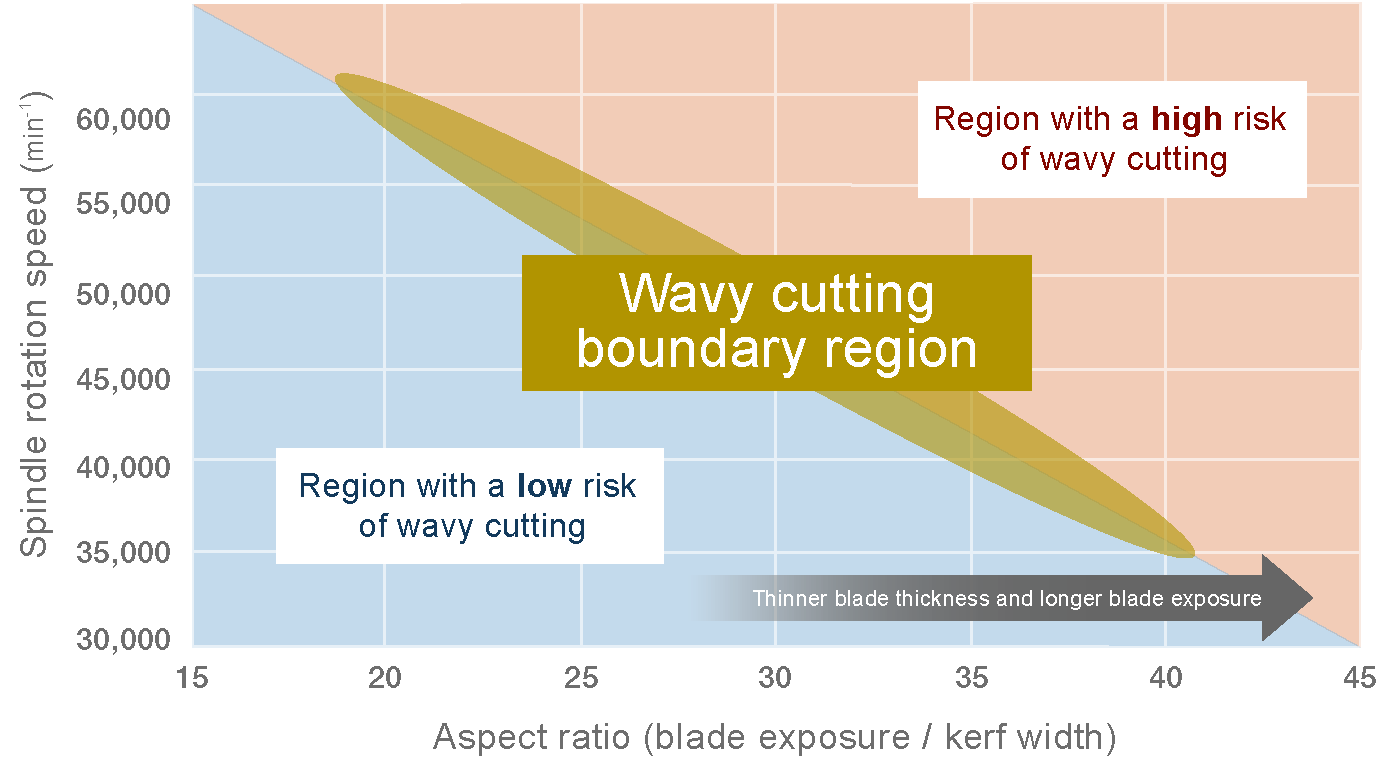
Wavy Cutting Boundary Region
When a blade is used near this boundary region, small changes in the workpiece or processing environment may induce wavy cutting. As one preventive measure, when conducting evaluations before mass production, we recommend testing at the lower limit of the kerf specification range and at a spindle rotation speed that incorporates a safety margin. In addition, the kerf width and blade exposure used to calculate the aspect ratio each have a specified range, and values near the upper or lower limits of these ranges may also affect the occurrence of wavy cutting.
Factor 4: Processing Environment
This section describes factors other than Factors 1–3 that may affect the occurrence of wavy cutting.
Insufficient Precutting
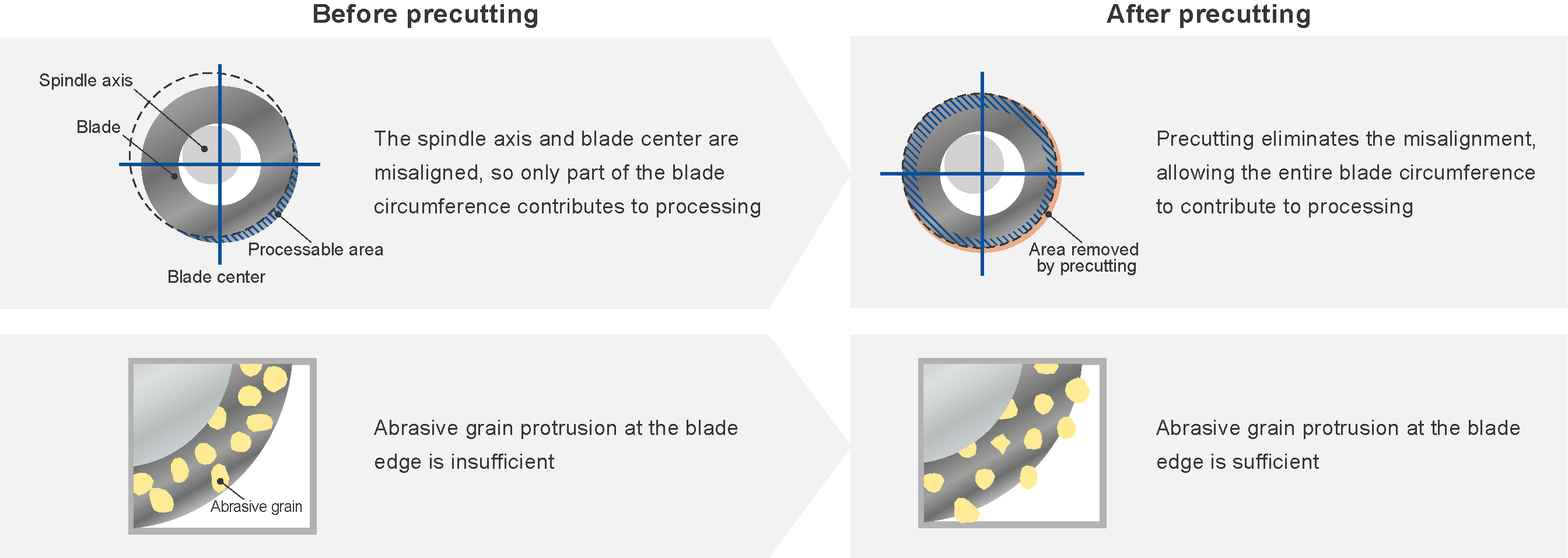
For dicing with a hub blade, precutting is recommended before processing product wafers. If precutting is not performed or the amount of precutting is insufficient, the processing load increases, resulting in a higher risk of wavy cutting.
High-Load Processing
Wavy cutting is more likely to occur under high processing loads, such as at high processing speeds, deep cut depths, or when many metal-film patterns are present along the cutting path. If wavy cutting occurs after changing the processing conditions or workpiece, the processing load may be a contributing factor.

Note: These results were obtained by changing only the cut depth under conditions intentionally set to make wavy cutting more likely to occur.
Blade Corrosion
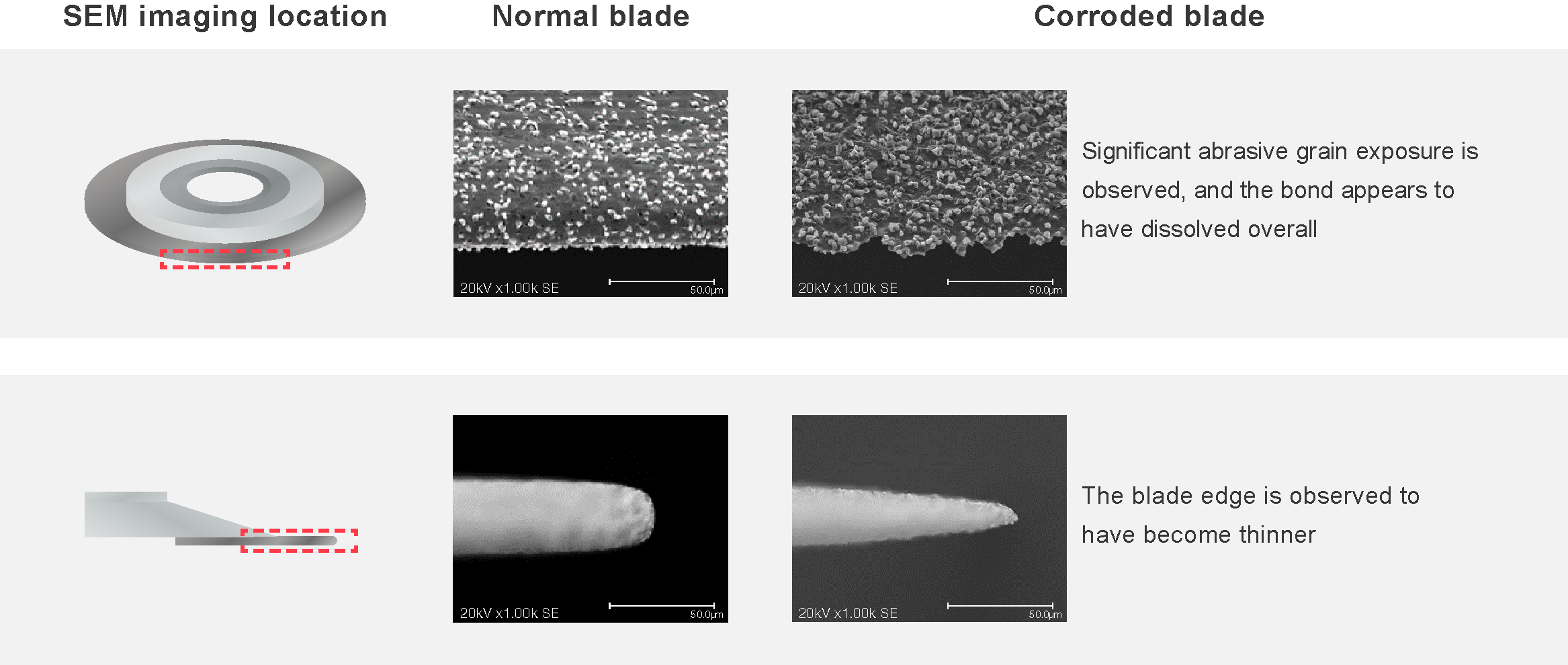
If the blade edge is corroded due to factors such as a CO2injector or cutting water additives, the blade strength may decrease, potentially resulting in wavy cutting.
Summary
Wavy cutting is significantly affected by spindle rotation speed and blade aspect ratio (the ratio of kerf width to blade exposure) and is also affected by factors such as precutting, processing load, and the cutting water conditions. To prevent wavy cutting, processing conditions should be set with these factors fully taken into account.